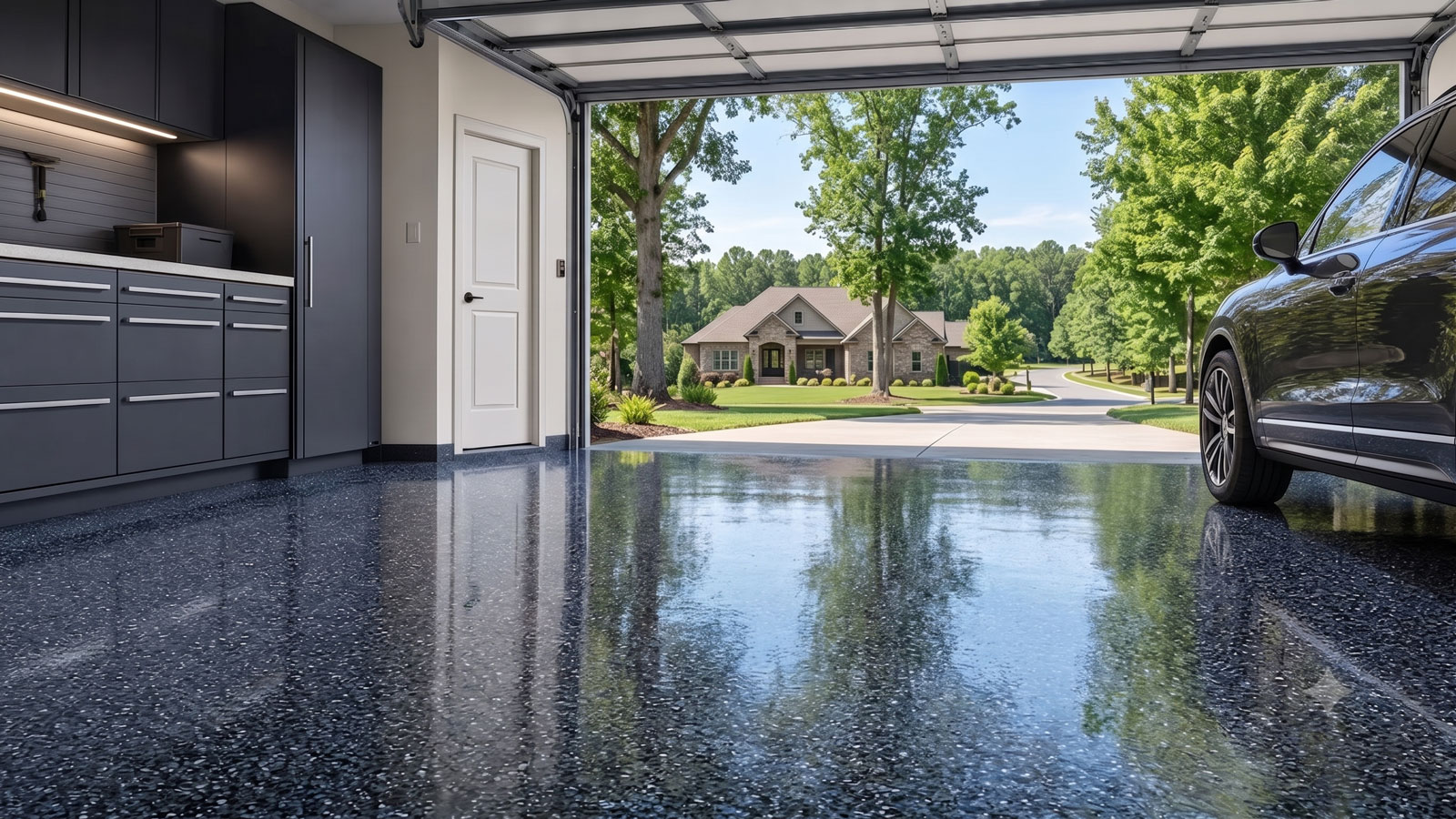
Garage Floor Coating in Chanhassen, MN
Floor Coating Services in Chanhassen, MN
Chanhassen remained primarily agricultural until the late 1960s, then entered a sustained suburban growth period after the village and township merged to form the city in 1967. Population was about 4,200 at that time and later grew beyond 20,000, creating a garage market with older rural-influenced properties alongside large amounts of comparatively modern attached concrete.
Water management is a defining local issue because the city covers about 24 square miles and includes eleven lakes wholly or partly within its boundaries. Chanhassen manages hundreds of public stormwater ponds that provide flood relief, erosion control, and water-quality treatment as development adds impervious surface. Those systems matter, but driveway pitch, apron ponding, and threshold entry remain the property-level evidence.
For garage coatings, newer suburban slabs may contain curing compounds, sealers, dense finishes, builder patches, and multiple control joints even when they show little wear. Older or former-rural garages can add oil, paint, later pours, and equipment use. The coating plan should separate those surface conditions from normal winter wetness and active exterior runoff.
Local Market Insight
Chanhassen's post-1967 suburban growth, eleven lakes, and hundreds of stormwater ponds create a distinctly water-managed suburban landscape. Many garages are relatively modern, but builder treatments and lot-level drainage still need direct inspection.
What Affects the Cost of Garage Floor Coating in Chanhassen?
Chanhassen project scope is influenced by builder treatments, control joints, multi-bay geometry, stormwater-pond and lake drainage at the lot, winter residue, storage-heavy use, and older rural-floor history where present. Newer appearance does not eliminate preparation.
- Modern subdivision concrete: Much of Chanhassen's housing developed after the late 1960s, so many floors are younger but can still carry curing compounds, sealers, dense finishes, and builder residue.
- Older rural-influenced floors: Established properties may have detached structures, oil contamination, old paint, multiple pours, or equipment use that require more cleaning, repair, and staging than a typical family garage.
- Lakes and stormwater ponds: Eleven lakes and hundreds of public ponds make drainage a real local issue, but actual threshold water, driveway flow, and persistent dampness should determine garage-level recommendations.
- Control joints and builder repairs: Newer attached garages can contain many joints and patch locations. The scope should state how these will be treated rather than covering every visible line with one generic repair approach.
- Garage size and storage: Multiple bays, sports gear, lawn equipment, cabinets, steps, and storage edges add staging and perimeter preparation beyond the main open concrete area.
- Winter wet use: Snowmelt, salt, wet boots, and family-entry traffic make traction and easy cleaning practical priorities. These use conditions should be addressed after reliable surface preparation.
Call for a clear, project-specific estimate — or request one online.
Local Garage-Floor Conditions in Chanhassen
Inspect a newer Chanhassen slab for surface treatments even if it appears spotless. Curing products and sealers can be difficult to see, and dense concrete still needs mechanical profiling so the coating bonds to the slab rather than to a weak or incompatible surface layer.
Drainage should be evaluated independently. Stormwater ponds and lakes are part of the larger public system, but the immediate garage condition depends on driveway grade, downspouts, apron low spots, and whether water actually crosses the threshold.
Older or larger-lot properties deserve a use-history check as well. Detached garages and utility spaces can have oil, equipment traffic, repairs, or multiple pours that add different preparation and traction needs from a newer attached family garage.
From Agricultural Chanhassen to Modern Suburb
Chanhassen's development history creates a useful local split. Farming remained dominant until the late 1960s, while the 1967 city formation marked the beginning of a much more suburban era. That means older rural-style garages and multiple generations of attached subdivision floors coexist within one service territory.
On newer slabs, the challenge is often surface chemistry rather than visible deterioration. Curing compounds, topical sealers, dense finishes, builder patching, and control joints can all affect adhesion. On older or former-rural floors, paint, oil, repairs, multiple pours, and equipment use are more likely to dominate.
A good estimate should identify which profile applies at the actual property. Removal, repair, profiling, edge work, equipment access, and garage use should be described separately instead of assuming Chanhassen's suburban appearance means every floor is alike.
Eleven Lakes and Hundreds of Stormwater Ponds
Chanhassen's eleven lakes and extensive public stormwater-pond system make water management a visible part of local development. The city manages hundreds of ponds because urbanization increases runoff from pavement and roofs, and those ponds help control flooding, erosion, and water quality across the developed landscape.
At a garage, however, public stormwater infrastructure is only context. Observe whether the driveway slopes toward the building, whether a downspout discharges near the apron, whether snowmelt ponds at the threshold, and whether the slab remains damp after surrounding concrete dries. Those signs are more useful than simply being near a lake or pond.
A coating can improve cleanup from snow, salt, and wet recreational gear, but it cannot correct recurring exterior runoff. Drainage correction, builder-treatment removal, repairs, surface profiling, and finish selection should remain separate project decisions. That preserves the value of Chanhassen's local water context without turning it into a blanket slab-moisture assumption.
Chanhassen's mix of newer family garages and older rural-influenced spaces also changes access and end use. Detached buildings may add equipment traffic, oil exposure, and longer staging routes, while large attached garages can add bays, joints, and storage edges. A complete quote should make those differences explicit rather than treating floor area as the only labor driver.
Chanhassen Garage Floor Coating FAQs
Do Chanhassen's lakes and stormwater ponds mean garages commonly need moisture treatment?
No. They make runoff locally important, but actual threshold water, persistent dampness, mineral deposits, and prior coating failure should determine whether water-related work is needed.
Why can a newer Chanhassen slab still need heavy preparation?
Curing compounds, sealers, dense finishes, and builder residue can interfere with adhesion even on young concrete. Mechanical profiling remains necessary.
How can an older rural-style Chanhassen garage differ from a subdivision garage?
It may have detached access, oil or equipment use, multiple pours, paint, and repairs, while newer attached floors more often raise builder-treatment and joint questions.
What do stormwater ponds actually change for a garage project?
They manage neighborhood runoff but do not control the pitch of an individual driveway. The useful inspection is still at the apron, threshold, downspouts, and slab.
How does winter use affect the finish?
Snowmelt and salt make cleanability and practical traction important, especially in a family-entry garage. Those finish priorities should follow proper concrete preparation.
Chanhassen Neighborhoods & Local Context
Phone Quote Line
Speak with a floor coating specialist about your project and get a realistic estimate range.
(952) 333-9111Typical Project Cost
$3,000–$5,500
Typical range for a two-car garage. Final pricing depends on floor size, concrete condition, prep work, coating type, and finish options.
Helpful Guides
Other Service Areas