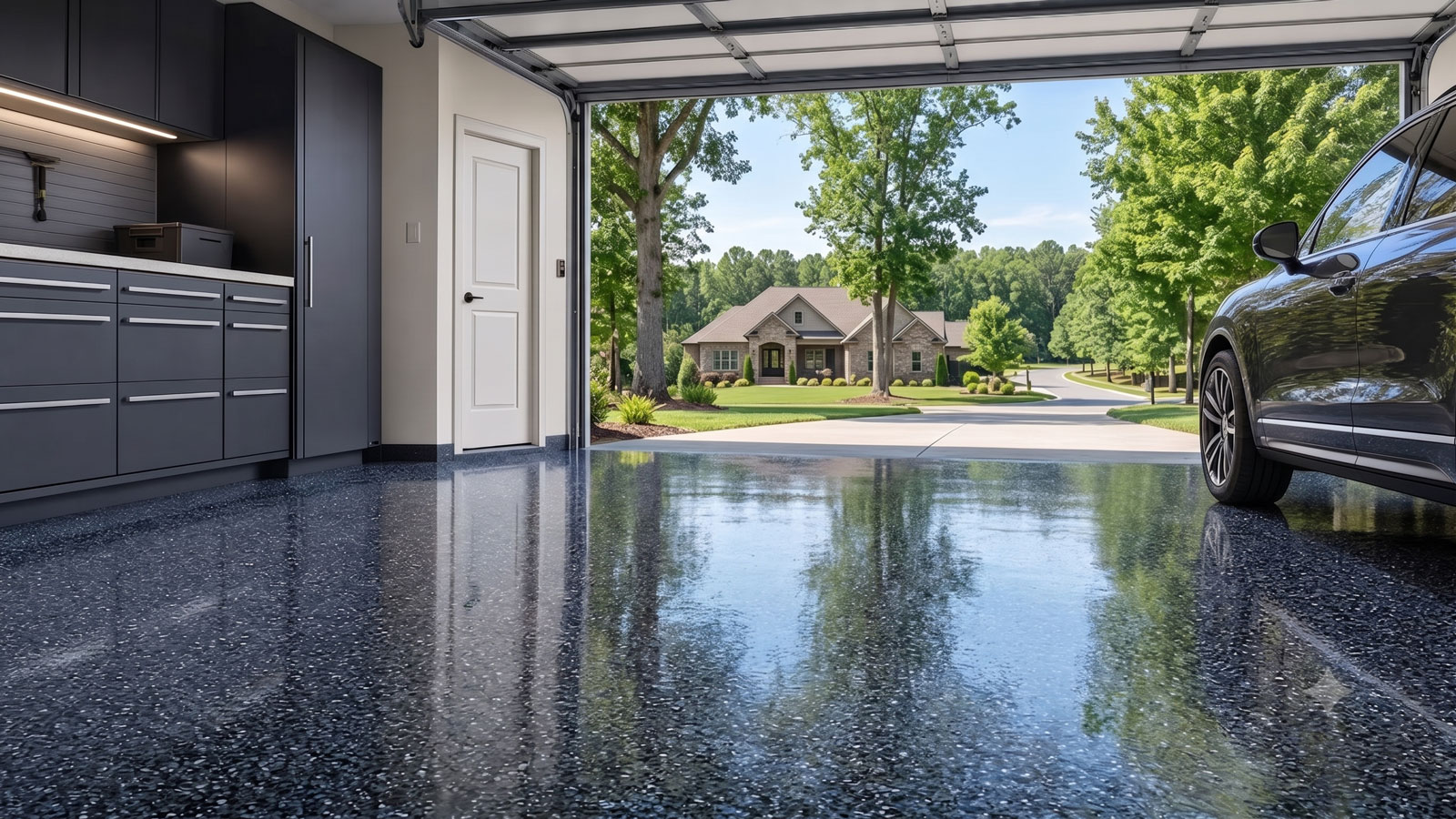
Garage Floor Coating in Bloomington, MN
Floor Coating Services in Bloomington, MN
Bloomington remained largely agricultural for roughly a century after its 1858 establishment, then transformed rapidly after World War II. Population jumped from about 9,900 in 1950 to more than 50,000 in 1960, creating an enormous base of mid-century houses and garages before later redevelopment and infill added newer concrete. That growth pattern makes 1950s and 1960s slab history especially relevant.
Bloomington is divided among several watershed systems, including Nine Mile Creek, the Lower Minnesota River, Richfield-Bloomington, and Riley-Purgatory-Bluff Creek areas. The city manages runoff from roofs, roads, and driveways through stormwater infrastructure, while active creek work shows that erosion and high flows remain current issues. At a garage, however, actual threshold runoff matters more than the watershed label.
Many Bloomington floors have had decades to accumulate paint, oil, road salt, repairs, and crack fillers. Rebuilt or newer garages can instead carry curing compounds, sealers, dense finishes, and builder patches. The project should identify whether the floor is a mature mid-century slab, a later repour, or newer concrete before preparation and finish are specified.
Local Market Insight
Bloomington's extraordinary 1950-to-1960 growth created a large mid-century garage stock, while several watersheds route runoff across a fully developed suburb. Decades of winter use and repairs are often as important as creek or floodplain context.
What Affects the Cost of Garage Floor Coating in Bloomington?
Bloomington project scope is commonly affected by old coatings, salt and vehicle contamination, cracks and repairs, later repours, builder treatments on replacement slabs, watershed-related lot drainage, and mature-site edge or access details. Mid-century floors often require more than simple cleaning and coating.
- Mid-century slab history: Bloomington's postwar growth created many garages that have now seen decades of vehicle use, paint, patching, crack fillers, and winter residue. Those layers can add removal and repair work.
- Replacement and rebuilt slabs: A 1950s home can have a much newer garage floor. Changes in concrete color, joints, patching, and coating edges should be used to identify later pours and different preparation needs.
- Several watershed systems: Nine Mile Creek and other watershed areas make drainage worth checking, but actual driveway flow, threshold entry, persistent dampness, and prior coating failure should drive water-related recommendations.
- Winter salt and surface wear: Repeated salty meltwater and grit can leave surface damage or contamination. The finished floor should support easy cleanup, while compromised concrete must be removed or repaired before coating.
- Cracks, joints, and old repairs: Mature slabs often contain stable cracks, utility cuts, patch compounds, and previous repair material that need evaluation before full-surface grinding and finishing.
- Mature-lot garage detail: Steps, perimeter edges, cabinets, drains, storage, and tighter driveway access can add preparation and staging labor even when the garage has a familiar two-car footprint.
Call for a clear, project-specific estimate — or request one online.
Local Garage-Floor Conditions in Bloomington
A Bloomington garage should first be evaluated for age and repair history. Postwar floors may have decades of patching, paint, or salt exposure, while a replacement slab can look newer but still contain sealers or other surface treatments. The slab itself should guide the preparation.
Drainage should be checked independently from floor age. A home within the Nine Mile Creek watershed may have a dry garage, while another property can have threshold ponding caused by local grading. Observe the driveway and downspouts during heavy rain or spring thaw.
Winter use then influences finish and maintenance. Snow, salt, and grit are normal Bloomington garage conditions, so useful traction and easy cleaning matter. These practical needs should be planned after old coatings, repairs, and weak surface material have been addressed.
Bloomington's 1950s Boom Created a Mature Garage Base
Bloomington's population surge from roughly 9,900 people in 1950 to more than 50,000 in 1960 is a powerful clue to the age of much of its housing and garage concrete. Large areas of the city were built during a concentrated postwar period, and those floors have now experienced many decades of vehicle traffic, winter salt, maintenance, and home improvement.
A mature slab can still be an excellent coating candidate, but it often requires more investigative preparation. Paint, oil, patch compounds, crack fillers, earlier repairs, and weakened surface areas must be exposed and evaluated. A later repour may create a second concrete generation within the same garage.
Homeowners should expect an estimate to explain which material will be removed, which repairs are needed, and whether later concrete sections require different treatment. That is more useful than assuming all Bloomington garages from the postwar era share the same condition.
Nine Mile Creek, the Minnesota River, and Developed-Surface Runoff
Bloomington sits within several watershed systems, including Nine Mile Creek and the Lower Minnesota River area, while city stormwater programs manage runoff from a mature network of streets, roofs, parking, and driveways. Active streambank and drainage work shows that developed-surface runoff remains a current local concern.
At the garage, the practical signs remain property-specific: apron ponding, threshold entry, downspouts aimed toward the drive, damp wall edges, mineral deposits, or repeated coating failure in the same location. Snowmelt from vehicles is normal use; water repeatedly entering from outside is a site problem that should be addressed separately.
A coating can simplify cleanup, especially after winter driving, but it cannot repair grade or creek-level drainage. The project should separate exterior water correction from coating removal, repairs, grinding, traction, and finish selection. That keeps Bloomington's watershed context tied to real homeowner consequences without overgeneralizing.
Bloomington homeowners should also distinguish mature-slab repair from garage-use priorities. Family entry, workshop activity, storage, and wet winter traffic can influence texture and cleaning needs, but those finish choices come after weak repairs, old coatings, and compromised surface material have been addressed.
Bloomington Garage Floor Coating FAQs
Why are mid-century garage floors so common in Bloomington?
The city grew extraordinarily fast after World War II, especially during the 1950s. Many garages therefore date from a similar postwar era and have accumulated decades of repairs and winter use.
Does being in the Nine Mile Creek watershed automatically mean slab moisture?
No. Watershed context makes drainage worth checking, but actual threshold entry, persistent dampness, mineral deposits, and previous coating failure are the evidence that matters.
How should an older Bloomington floor be evaluated?
Look for paint, oil staining, patch compounds, crack fillers, later pours, and salt-damaged or weak surface material before deciding how much grinding and repair are required.
Can a 1950s home have a newer garage floor?
Yes. Garages are often rebuilt or repoured. Joint patterns, texture changes, patches, and coating edges can reveal a slab that was installed long after the house.
How does winter salt affect maintenance after coating?
A coated floor is easier to clean, but salty meltwater and grit should still be removed routinely. Good maintenance preserves appearance and traction even on a durable system.
Bloomington Neighborhoods & Local Context
Phone Quote Line
Speak with a floor coating specialist about your project and get a realistic estimate range.
(952) 333-9111Typical Project Cost
$3,000–$5,500
Typical range for a two-car garage. Final pricing depends on floor size, concrete condition, prep work, coating type, and finish options.
Helpful Guides
Other Service Areas